
Root Canal Treatment: Does It Hurt, and How Do You Know You Need One?
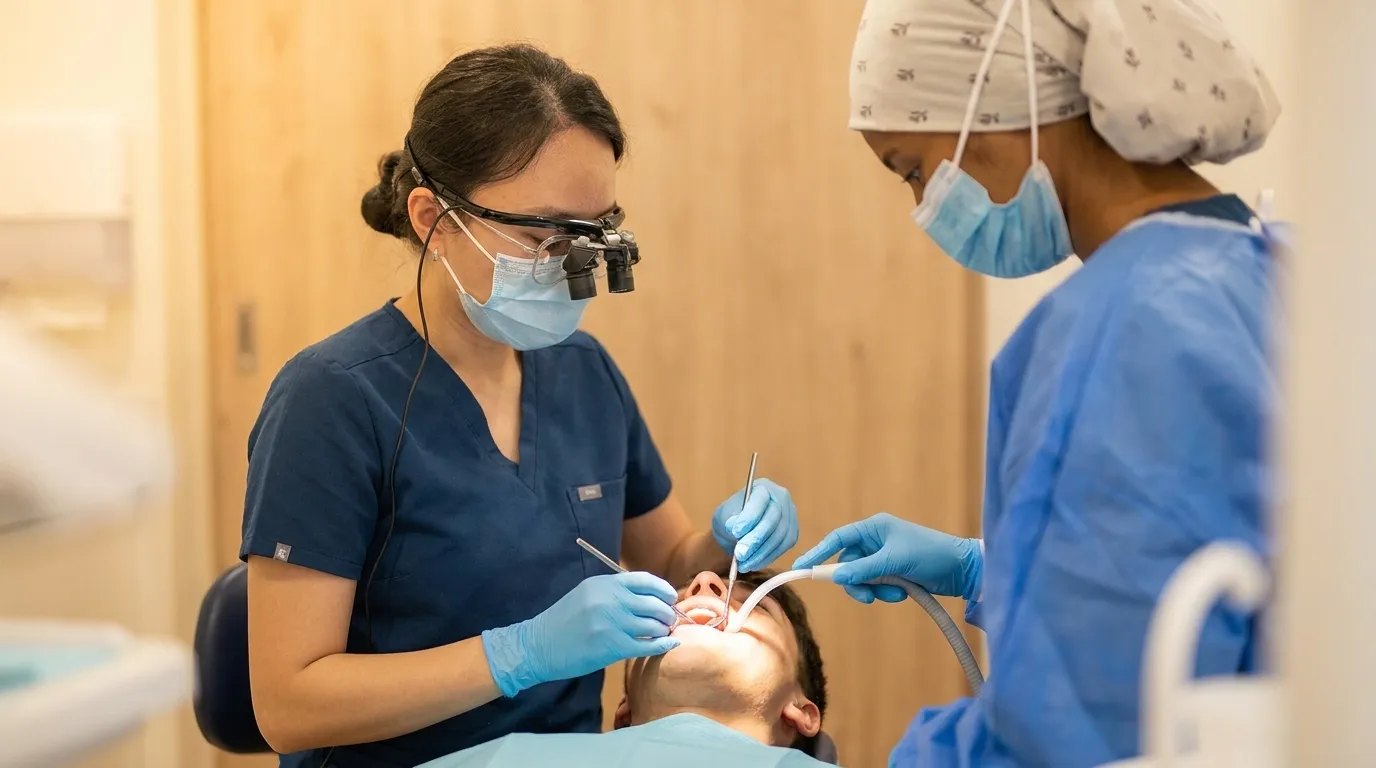
Few dental phrases trigger more anxiety than "root canal". The reputation is decades out of date. Modern root canal treatment is done under effective local anaesthetic and feels similar to having a filling done, just longer. What actually hurts is the infected tooth before treatment. Here is how to recognise when a tooth needs a root canal, what happens during treatment, and why saving the tooth is usually worth it.
What is a root canal treatment?
Inside every tooth is soft tissue called the pulp, containing the nerve and blood supply. When deep decay, a crack, or trauma allows bacteria to reach the pulp, it becomes inflamed and eventually infected. At that point the tooth cannot heal itself.
Root canal treatment (rawatan akar gigi) removes the infected pulp, disinfects the canal system inside the roots, and seals it. The tooth stays in your mouth, keeps functioning, and the infection source is eliminated.
Signs you might need a root canal
Watch for these patterns:
A toothache that wakes you at night or throbs with your heartbeat. Spontaneous night pain is one of the strongest indicators that the nerve is inflamed beyond recovery.
Lingering sensitivity to hot or cold. Brief sensitivity that fades in seconds is common and often harmless. Pain that lingers for 30 seconds or more after the trigger is removed suggests nerve involvement.
Pain on biting or chewing on one specific tooth, a pimple like bump on the gum near a tooth, a tooth that has darkened compared to its neighbours, or swelling of the gum or face.
One warning worth knowing: sometimes severe pain suddenly stops on its own. This is not recovery. It usually means the nerve has died, and the infection is now spreading silently into the bone. A tooth that hurt badly and then went quiet still needs to be examined.
Root canal vs extraction: why save the tooth?
Pulling the tooth is faster and cheaper on the day, which is why many patients ask for it. But the gap costs more later. Neighbouring teeth tilt into the space, the opposing tooth over erupts, chewing efficiency drops, and replacing the missing tooth properly with an implant or bridge costs considerably more than the root canal would have.
No implant matches your natural tooth. Where a tooth can be predictably saved, saving it is generally the better long term decision. Where it cannot, your dentist should tell you honestly and discuss replacement options.
What happens during treatment?
Treatment takes one to three visits depending on the tooth and the infection. Front teeth have one canal; molars have three or four, which is why molar root canals take longer.
Under local anaesthetic, the dentist opens the tooth, removes the infected pulp, cleans and shapes the canals with fine instruments, disinfects them, and seals them with a filling material. Most patients describe the experience as uneventful. Mild tenderness for a few days afterwards is normal.
The final step matters as much as the root canal itself: a root treated tooth, especially a molar, becomes more brittle over time and usually needs a crown to protect it from fracture. Budget for the crown as part of the treatment, not an optional extra.
Don't wait on a toothache
Tooth infections do not resolve on their own, and delaying treatment narrows your options from a routine root canal to a possible extraction. If you are in pain in the Bukit Jalil, Sri Petaling or Puchong area, contact us promptly and we will prioritise assessment.
WhatsApp us for an appointment.
Frequently asked questions
Is root canal treatment painful?
The procedure is performed under local anaesthetic and most patients find it comparable to having a filling placed. The severe pain people associate with root canals is caused by the infection before treatment, which the procedure relieves.
How many visits does a root canal take?
Typically one to three visits depending on which tooth is involved and how severe the infection is. Molars have more canals and usually take longer than front teeth.
Do I really need a crown after a root canal?
For back teeth, usually yes. A root treated tooth becomes more brittle, and a crown protects it from cracking under chewing forces. Your dentist will advise based on how much tooth structure remains.
My toothache went away by itself. Am I in the clear?
Not necessarily. When an inflamed nerve dies, pain can stop while the infection continues spreading into the bone. A tooth that hurt significantly and then went quiet should still be examined.